Context
In 2022, I worked as a UX/UI Web Designer Intern at Carrefour Voyages, collaborating with a Lead Designer, three developers, and an acquisition marketer.
My work involved running analytics, identifying friction points with Contentsquare, and proposing UX/UI improvements to boost user engagement.
My other daily responsibility (not so relevant to the case study) is designing graphics, assuring visual coherency within every variation of the offer visuals through different formats (on site, on social media, print, multilingual, animations…) and putting easter eggs around the website during special seasons such as Noel or Black Friday.
Discovery
While analyzing performance on one of our main catalogue pages, I noticed something striking: 50% of the products were never seen by desktop users.
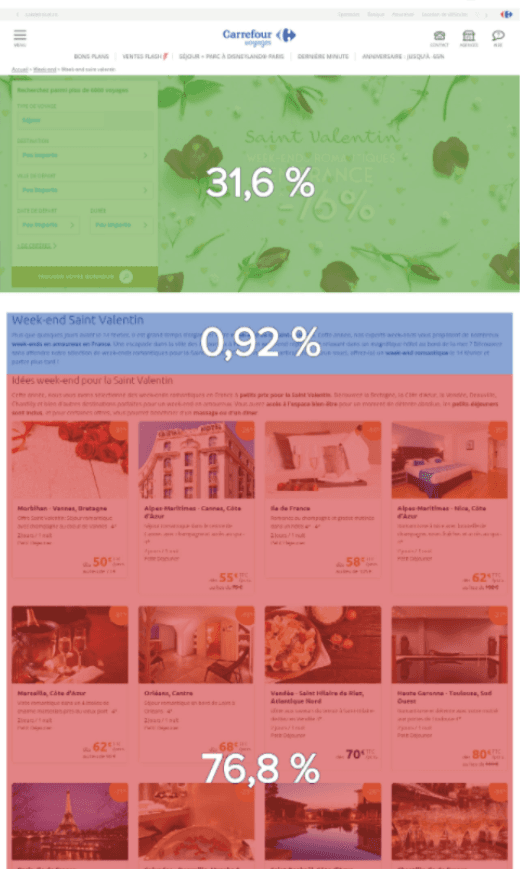
The attractiveness rate was 76,8% for products is a good indicator
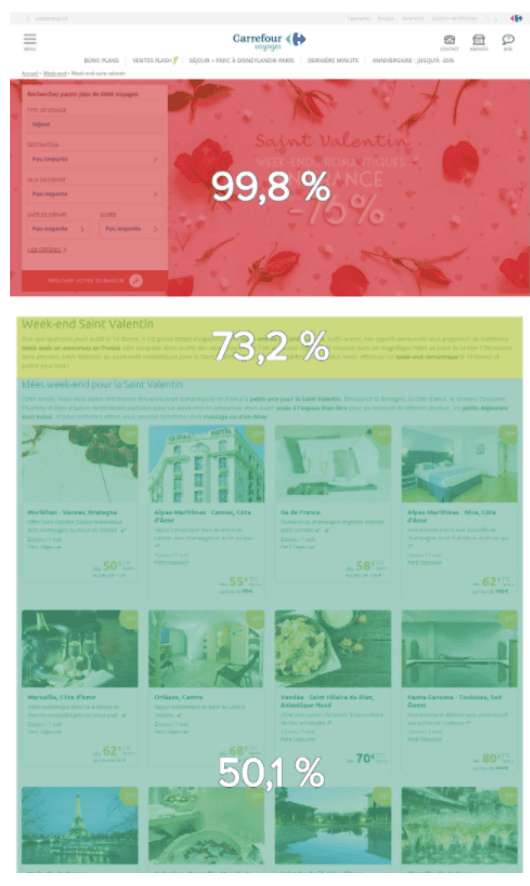
The visibitly rate was only 50%
By observing two key metrics on different zones of the page :
Products below the fold had a 76.8% attractiveness rate — users clicked them when they actually saw them,
…yet their visibility was only 50%.
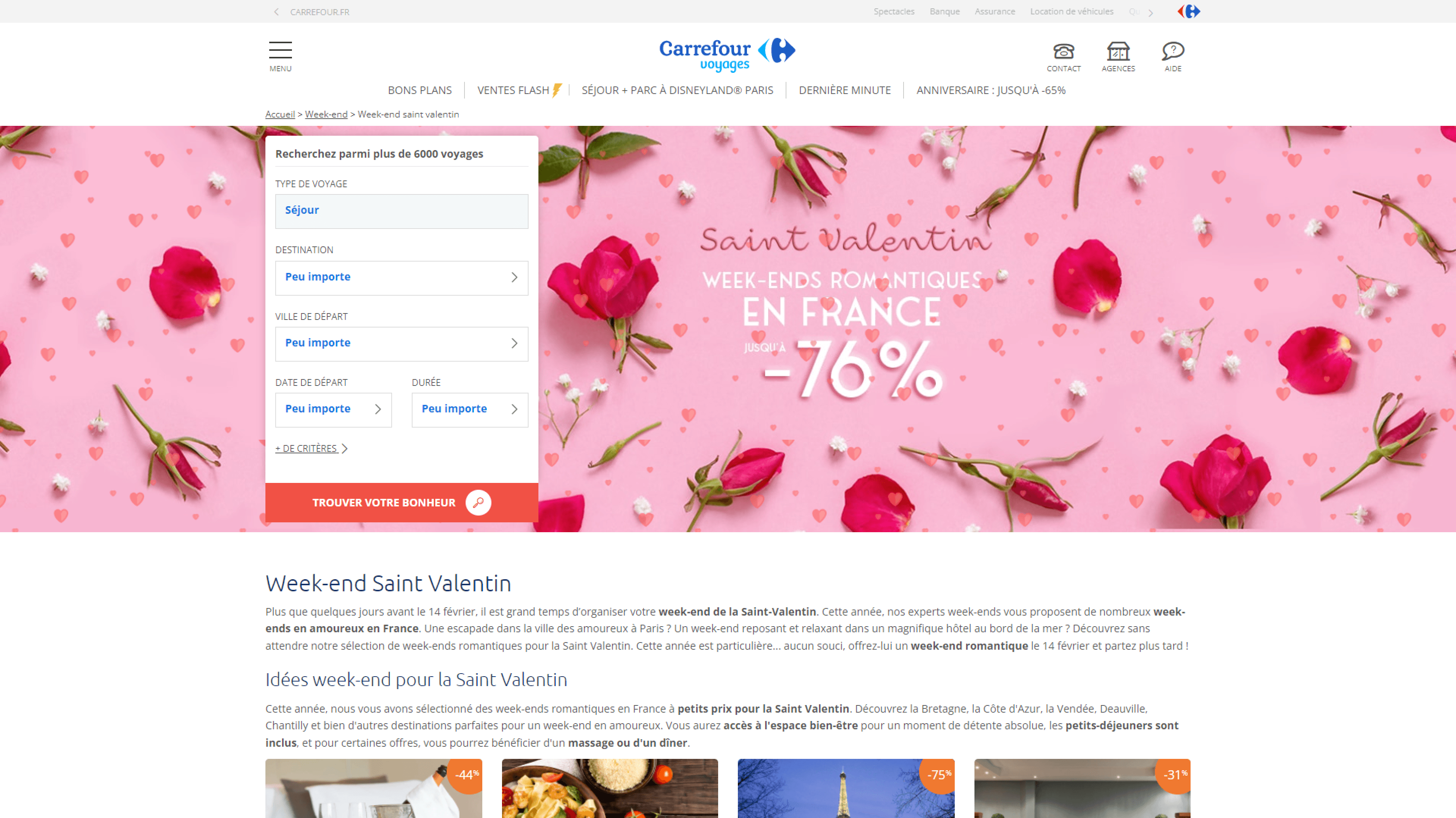
In short: users were willing to explore the catalogue, but half of them never even reached the products.
The culprit ? Key elements pushed too far below the fold, creating an invisible dead zone. The layout itself was hiding value.
Problem Statement
Half the users never even see the products on catalogue page because we barely see them from first glance !!
Design focus : increase product visibility before the scroll line.
That simple ?
Well, actually we has already had another Hero option for bringing up the offers for certain collections. This existing hero banner is much smaller and can bring up the deals before the fold, it's giving something like this :
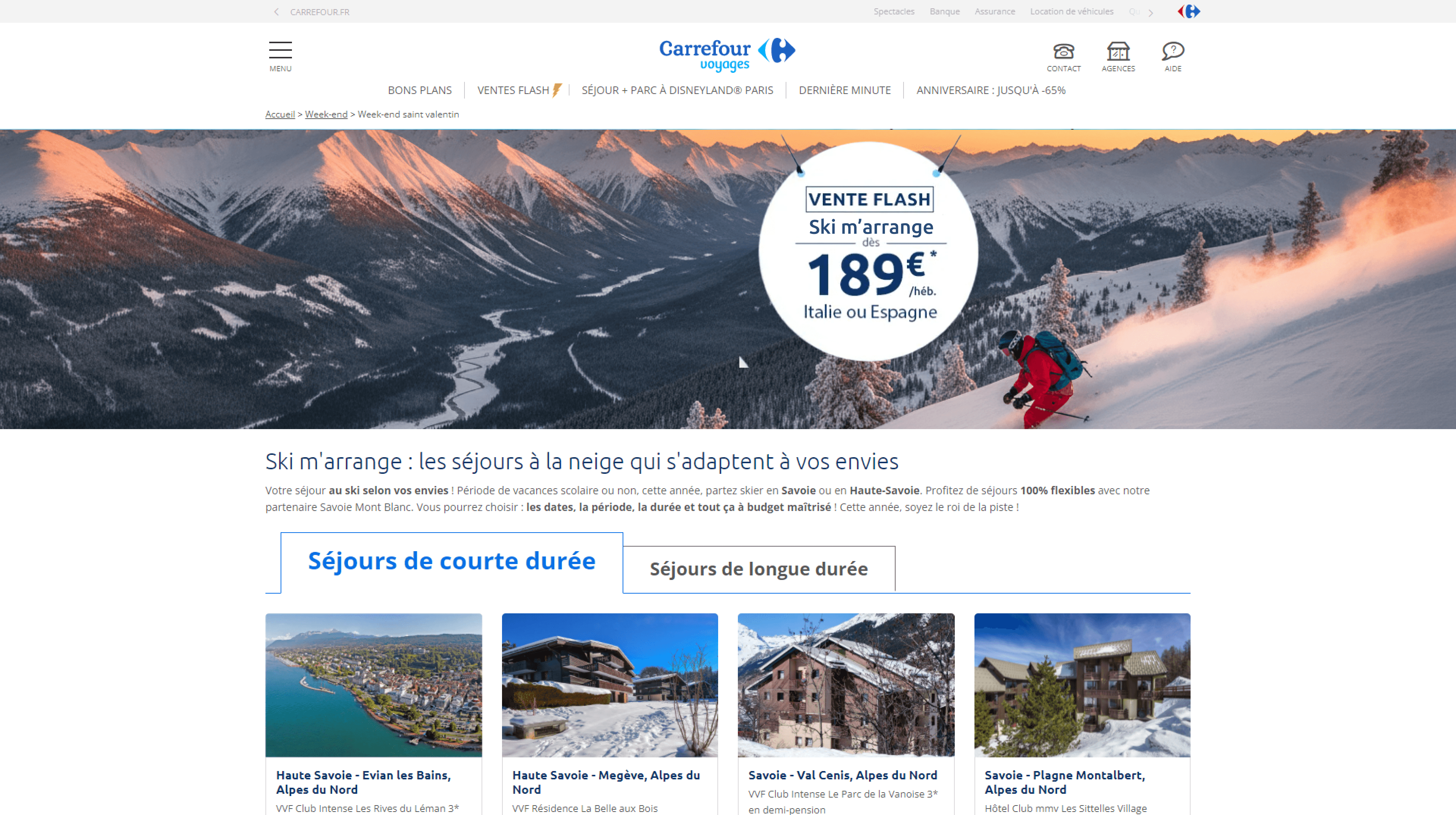
But that also means sacrificing the search bar (yes the big red one on the hero banner) which helps users quickly re-run their search preferences while cataloguing.
Design Statement
How can we position the header for easy re-search while keeping the primary focus on the offers?
So then I proposed targeted, lightweight design adjustments in the hero and the navigation bar with some versions and iterations
Reducing the height of the universal hero bloc to free space.
Keeping the visual identity of Carrefour Voyages (white circular background), allow brand‑regulated deal visuals.
Ensuring the layout prioritized what users came for: the offers
Make a quick shortcut to search bar on the navigation, in case the user want to relance their search.
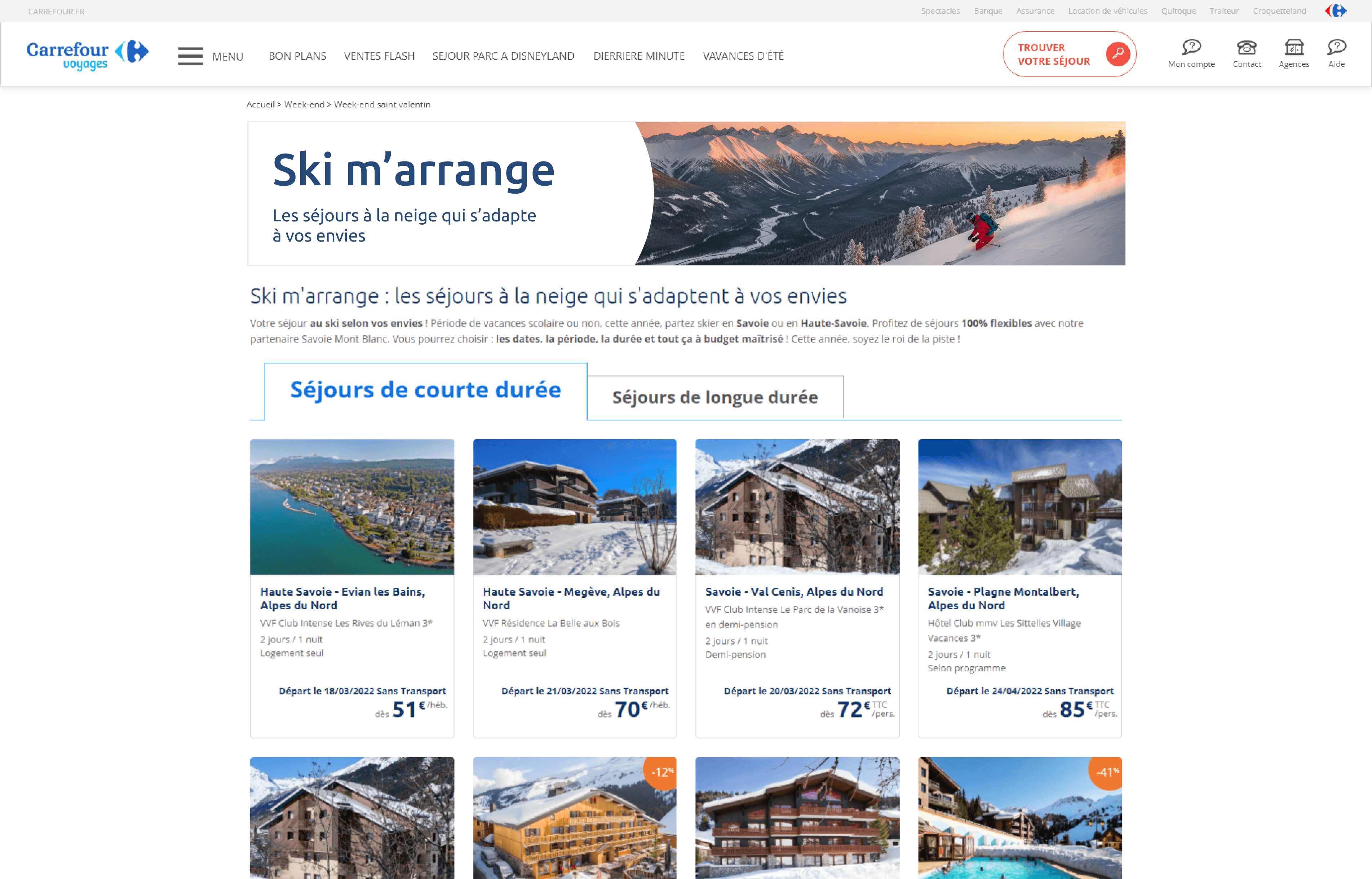
Option search bar explored N.01 : Keeping the iconic red CTA from the original search bar that presents on the Homepage
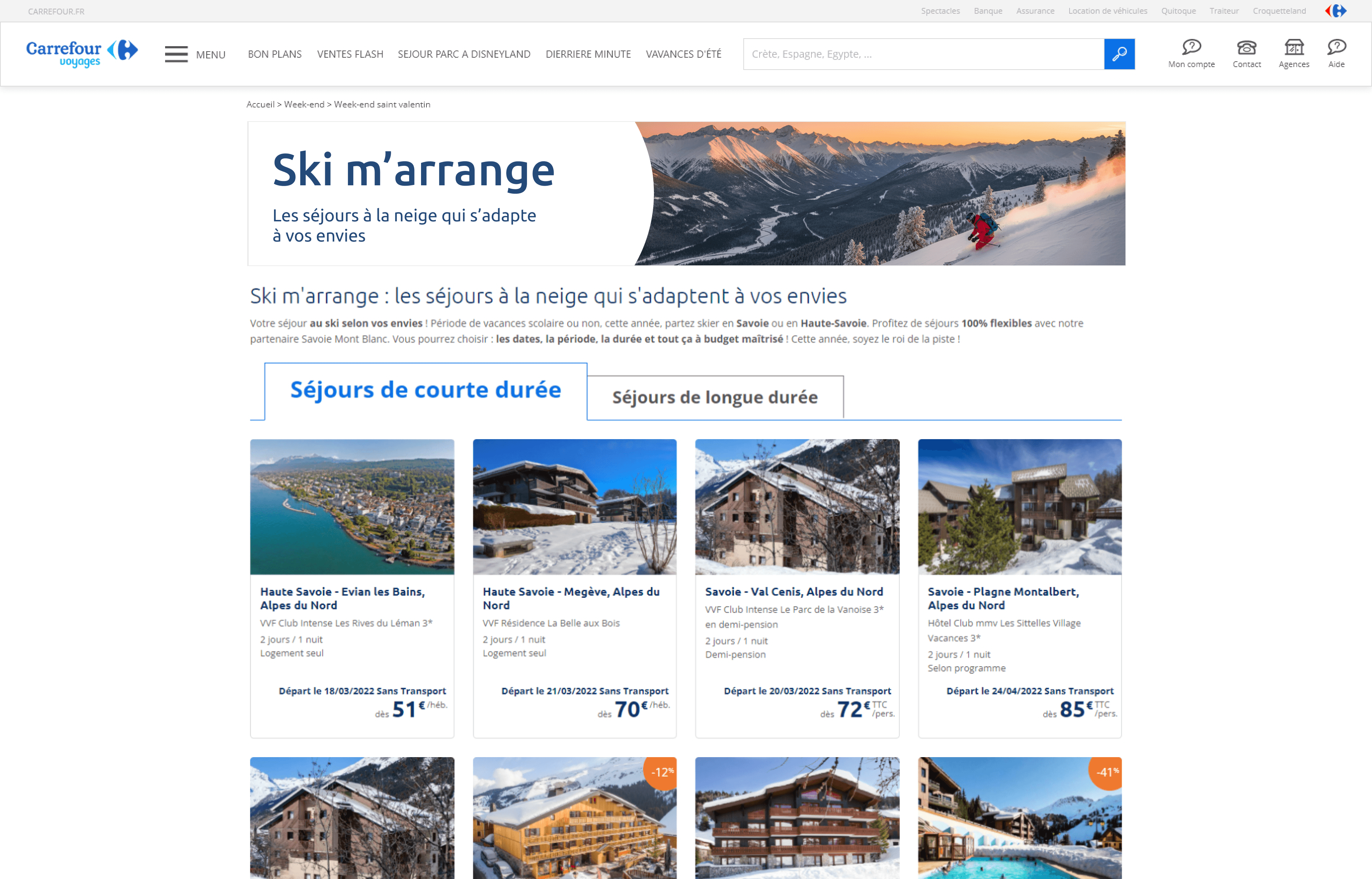
Option search bar explored N.02 and final choice:
The search bar from Carrefour main homepage
Results
While a full A/B test couldn’t be executed by the time i was there, I could still estimated the impact by at least 25% raise in product views and raised the time spending on these pages.
However, now looking back, I might have done it differently…
Because honestly, I first believed that my job there was done once I finished my reports and presentations and received good feedbacks from my team and a "go" from our direction to apply the changes. However not be able to assist the lauch is my biggest regret.
If I worked on this again, I would:
Break changes into smaller, dev‑friendly increments to accelerate impact and integration.
Stay proactive during follow‑up to maintain momentum.
Re‑validate assumptions: the fold line and search bar are only one hypothesis for bounce before seeing offers.. I could have explore and test further to understand why.